
Have you ever received a message where someone suddenly used MIA and you had no idea what they meant? It can feel confusing when people drop short internet slang into conversations and expect everyone to understand it. If you’ve been searching for Mia meaning in text, you’re definitely not alone-many people wonder what it really means and when it’s used.
In this guide, we’ll clearly explain the Mia meaning in text and how people use it in everyday chats. You’ll also learn what does mia mean in text, what does going mia mean, the common mia slang, and even the mia meaning in relationship conversations. By the end, you’ll understand what does mia mean in texting and how to use it naturally in messages.
What Does MIA Mean? (Spoiler: It’s Not Just for Soldiers)
MIA is a common internet acronym that means “Missing in Action.” In modern texting slang, people use it to describe someone who suddenly disappears from a conversation, group chat, or social media for a while.
Originally, the phrase Missing in Action came from military reports. It described soldiers whose whereabouts were unknown during war. Over time, the phrase moved into everyday language and eventually became popular internet slang used in online messaging, social media, and chat conversations.
Today, the meaning is usually simple. If someone says a friend went MIA, they mean that person stopped replying, disappeared from a chat, or hasn’t been active online for some time.
Common Situations Where People Use MIA
- A friend hasn’t replied to messages for days
- Someone disappears from a group chat
- A gamer suddenly leaves a match or stops responding
- A coworker goes quiet in a workplace chat
In casual digital communication, MIA in chat meaning usually points to a temporary absence, not a permanent one. It’s often used in a playful or lighthearted way.
Quick Text Examples
Example 1 (Casual texting):
“Hey, you went MIA all weekend. Everything okay?”
Example 2 (Group chat):
“Where did Jake go? He’s been MIA since yesterday.”
In short, MIA slang meaning today simply refers to someone who has disappeared from conversation or gone quiet online, whether it’s in a text message, social media chat, gaming lobby, or messaging app.
Real-Life Text Examples
Seeing MIA in a conversation is common, and context usually makes it clear what it means. Here are a few realistic examples from texting, social media, and casual chats:
Example 1 – Casual Texting:
You: “Hey! You’ve been quiet all week.”
Friend: “Sorry, I went MIA. Been swamped with work.”
Meaning: Your friend disappeared temporarily and is just now checking in.
Example 2 – Group Chat:
“Does anyone know where Sarah is? She’s been MIA since yesterday’s hangout.”
Meaning: Sarah hasn’t responded or appeared in the group chat.
Example 3 – Social Media / DM:
DM on Instagram: “You’ve been MIA on here! Miss seeing your posts.”
Meaning: The person hasn’t been active on social media for a while.
Example 4 – Gaming Chat:
“Teammate went MIA during the last round. We had to play 4v5.”
Meaning: The player disconnected or stopped participating mid-game.
In all these examples, MIA in texting slang conveys a temporary disappearance or absence, and it’s usually informal, neutral, or slightly playful depending on context.
From War Zones to WhatsApp: How MIA Went Viral
The term MIA, short for Missing in Action, started in the military to report soldiers whose whereabouts were unknown during battle. Over the years, it left the battlefield and entered everyday language as a way to describe anyone who goes quiet or disappears.
With the rise of texting, social media, and online gaming, MIA became a popular internet slang term. People now use it on platforms like WhatsApp, Instagram, TikTok, and Discord to indicate someone is temporarily offline, not replying, or off the radar. Its spread online shows how military phrases can evolve into casual, playful digital language.
Example:
“Why haven’t you replied? You’ve been MIA all day!”
Here, MIA clearly conveys that the person is absent from the conversation, without any literal military meaning.
MIA vs. Ghosting vs. AFK: What’s the Difference?
These three terms often get confused, but they have different meanings in digital communication:
| Term | Meaning | Common Context |
| MIA | Temporarily absent, not replying | Texting, social media, gaming |
| Ghosting | Deliberately ignoring someone | Dating, personal conversations |
| AFK | Away from keyboard, temporarily unavailable | Gaming, online work chats |
The interpretation may vary depending on the situation: MIA is usually temporary and casual, ghosting implies intentional avoidance, and AFK is mostly gaming-specific.
Example in texting:
“I thought you were mad at me, but you were just MIA all weekend.”
Here, the tone is neutral or playful, unlike ghosting, which often carries a negative or emotional weight.
How to Respond When Someone Calls You MIA
If a friend or colleague says you’ve been MIA, your response can be casual, playful, or explanatory, depending on the context. The key is to acknowledge your absence without overcomplicating things.
Tips for responding:
- Keep it light: “Haha, yeah, I went MIA for a bit. Busy week!”
- Give a quick reason: “Sorry for disappearing, I was swamped with work.”
- Playful comeback: “MIA? More like mastering the art of doing nothing!”
Using MIA in texting slang allows you to respond in a friendly, informal way. Avoid overexplaining unless it’s a professional context, where a simple acknowledgment works best.
Example:
Friend: “You’ve been MIA all weekend!”
You: “Oops! Yeah, my phone died and I went off the grid for a bit.”
MIA Around the World (Not Everyone Uses It!)
While MIA is widely recognized in English-speaking countries, its usage varies globally. Some regions may not use the acronym at all, or they might have local slang for someone disappearing from conversation.
Key points:
- United States & UK: Common in texting, social media, and gaming chats.
- Other English-speaking regions: Some understand it, but usage may be less frequent.
- Non-English countries: People often rely on local phrases instead of MIA, though exposure via TikTok, Instagram, or memes is increasing.
In short, MIA social media meaning is not universal. Its recognition depends on internet culture exposure, platform usage, and local slang adoption. This makes it important to know your audience when using it in messages.
MIA in 2024: Why It’s Bigger Than Ever
In 2024, MIA has grown beyond casual texting. Platforms like TikTok, Instagram, WhatsApp, and Discord have made it a go-to term for describing anyone who disappears from chats or social media. Its rise is fueled by Gen Z internet language, meme culture, and viral acronyms that spread quickly online.
The term is now not just a chat abbreviation-it’s part of digital communication trends, appearing in captions, memes, and even playful teasing among friends. People also use it in gaming lobbies or group chats to jokingly call out someone who’s been offline or inactive for a while.
Example:
“Where’s Emma? She’s been MIA on TikTok all week!”
Here, MIA signals a temporary absence from a social media platform, not a serious issue.
When NOT to Use MIA
While MIA is casual and playful, it’s not suitable for formal or sensitive situations. Misusing it can make you seem careless or unprofessional.
Situations to avoid:
- Workplace emails or professional communication
- Serious conversations about someone’s wellbeing
- Situations where absence is unplanned or critical (like missing a meeting)
Alternative: Use more neutral phrases like:
- “I was unavailable for a while”
- “I wasn’t able to respond”
- “I was out of touch”
By understanding when to use MIA appropriately, you can keep your messages friendly, informal, and contextually appropriate, whether in chats, social media, or casual texting.
Background & History of MIA
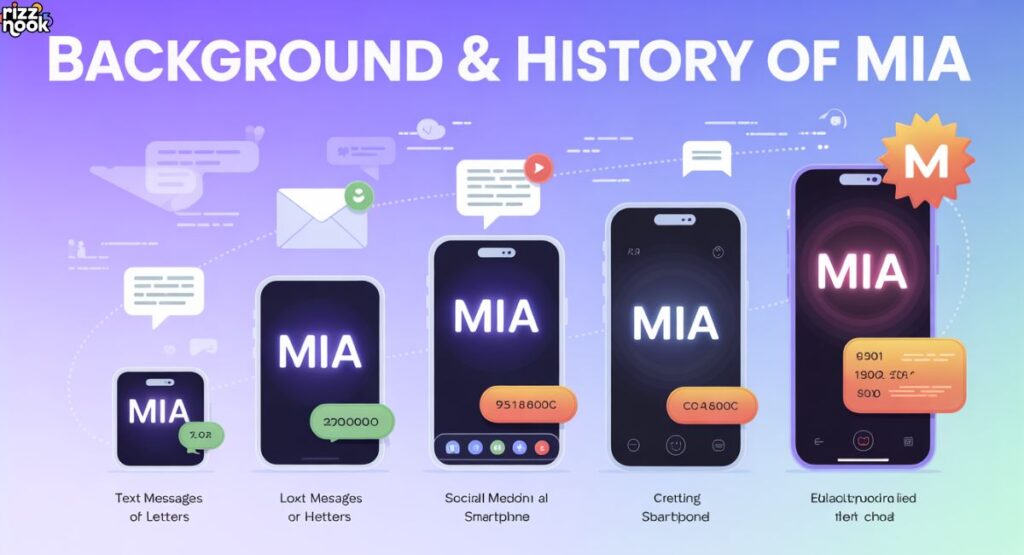
The term MIA, which stands for Missing in Action, originally comes from military reports. During wars, it was used to identify soldiers whose location or status was unknown after a battle. Over time, the phrase left the battlefield and entered everyday language.
In the 1990s and 2000s, MIA became popular online as internet slang. People started using it in texting, chat apps, and social media to describe anyone who disappeared from a conversation or went quiet for a while. Today, it’s a widely recognized term in digital communication, from casual texting to gaming and social media.
Usage in Different Contexts
MIA can appear in multiple situations, each with a slightly different meaning depending on the platform or audience:
- Texting & Messaging Apps: A friend hasn’t replied for a few days.
- Social Media: Someone stops posting or interacting on Instagram, TikTok, or WhatsApp.
- Gaming Chats: A teammate leaves mid-game or stops responding in a session.
- Workplace Communication: A colleague doesn’t respond in a chat thread (less casual; may require careful phrasing).
Example:
“John’s been MIA in our WhatsApp group all week.”
Here, MIA simply signals someone is temporarily absent from communication, not that anything serious has happened.
In short, MIA texting slang is flexible and depends on context, from playful teasing among friends to noting someone’s absence in online communities.
Professional Communication
While MIA is widely used in casual chats, it’s usually not appropriate in professional communication. Using it in emails or formal workplace messages can come across as too informal or unclear. Instead, professionals should opt for clear, neutral language to indicate absence or delayed responses.
Tips for professional use:
- Replace MIA with phrases like: “I was unavailable,” “I was out of the office,” or “I couldn’t respond earlier.”
- Use in internal messaging only if your team is familiar with informal acronyms.
- Avoid using it in reports, client emails, or serious workplace discussions.
Example:
Casual: “Sorry, I went MIA yesterday!”
Professional: “Apologies for the delayed response; I was unavailable yesterday.”
Using MIA appropriately in professional contexts ensures your communication remains respectful, clear, and suitable for work environments.
Hidden or Offensive Meanings
Though MIA is usually neutral or playful, it can sometimes carry unintended tones. For example:
- Negative implication: Calling someone MIA repeatedly can make them feel guilty or criticized for not replying.
- Sensitive situations: Using MIA when someone is absent due to illness, family issues, or emergencies may seem inconsiderate.
- Sarcasm or teasing: Among friends, saying “You went MIA again!” can be playful, but tone matters.
Example:
“Wow, you went MIA again-typical!”
Depending on context, this could be lighthearted teasing or a slightly critical comment.
In general, consider the context and the person you’re messaging before using MIA, especially if there’s a chance it could be interpreted negatively.
Usage in Online Communities & Dating Apps
In online communities, forums, and dating apps, MIA is commonly used to point out someone who suddenly disappears from conversations or stops responding. On platforms like Tinder, Bumble, Discord, or gaming communities, people might say someone went MIA if they haven’t replied in a while, left a chat, or became inactive.
Tips for usage in these contexts:
- Keep it casual and playful when messaging friends or matches.
- Avoid using it in serious discussions about someone’s absence or well-being.
- Pair it with context: “You’ve been MIA this week, hope everything’s okay!”
Example (Dating App):
“Hey! You’ve been MIA for a few days. Everything good?”
Here, MIA highlights a temporary absence without sounding harsh.
Comparison with Similar Terms
Many abbreviations describe someone being absent, but they carry slightly different meanings:
| Term | Meaning | Context |
| MIA | Temporarily disappeared, not replying | Texting, social media, casual chats |
| Ghosting | Intentionally ignoring someone | Dating, personal relationships |
| AFK | Away from keyboard | Gaming, online work chats |
| BRB | Be right back | Texting or gaming, very short-term absence |
| AWOL | Absent without leave (serious) | Military, workplace contexts |
Key distinction:
- MIA is usually temporary and neutral or playful.
- Ghosting implies intentional avoidance and is often negative.
- AFK is gaming-specific, indicating a short absence.
Example in texting:
“I thought you were ignoring me, but you were just MIA all weekend.”
This shows that MIA is lighthearted, unlike ghosting, which carries emotional weight.
10 Slang Terms & Acronyms Containing MIA
Beyond the standard MIA, several slang variations and related acronyms include it to convey absence or inactivity. Here are ten examples:
MIA – Missing in Action (classic)
Semi-MIA – Partially absent or inactive
MIA mode – Deliberately offline or unresponsive
MIA vibes – Someone giving the impression they’re absent or distant
MIA energy – Playful way to describe a friend who disappears frequently
MIA hours – Periods of inactivity in messaging or gaming
MIA status – Online status indicating absence
MIA moment – Temporary disappearance from conversation or social media
MIA squad – Group members who are all inactive or missing
MIA alert – Lighthearted notification when someone goes missing in a chat
These terms show how MIA slang meaning has expanded from texting into memes, social media captions, and even gaming culture. Using them can be playful, humorous, or descriptive depending on the audience.
Regional & Cultural Differences
The recognition and use of MIA varies depending on region, culture, and platform:
- United States & UK: Widely understood in texting, gaming, and social media chats.
- Non-English-speaking countries: Some may recognize MIA due to global platforms like TikTok or Instagram, but local equivalents or slang are often used instead.
- Youth and Gen Z culture: More likely to use MIA in playful, casual contexts online.
- Professional or formal environments: Less common; alternative phrases are preferred.
Example:
In the U.S., a friend might say, “You went MIA all weekend!” while in another country, they might simply say, “You’ve been quiet” or use a local slang term.
Understanding regional slang differences helps ensure MIA is used appropriately and clearly in conversations worldwide.
Why MIA Is Trending Harder in 2026
In 2026, MIA has become more popular than ever, thanks to the influence of social media, viral memes, and short-form video platforms like TikTok and Instagram Reels. People use it not just in texting, but in captions, stories, and posts to jokingly call out friends or highlight inactivity.
Gen Z and younger audiences have embraced MIA texting slang as part of digital culture, blending humor, relatability, and casual social commentary. It’s also common in gaming communities, where calling someone MIA can be both descriptive and playful. The trend reflects how internet acronyms can evolve and spread faster than ever across multiple platforms.
Example:
“Where’s Jake? He’s been MIA on TikTok all week. #offthegrid”
Modern Digital Etiquette: The Unspoken Rules Behind MIA
Using MIA in chats or social media comes with a few unspoken etiquette rules to keep communication smooth and friendly:
- Know your audience: Don’t call out someone’s absence in a way that might embarrass them.
- Context matters: MIA works best in casual or playful conversations. Avoid using it in serious or professional messages.
- Timing is key: Using MIA immediately after someone stops replying may feel pushy; give them some time.
- Tone is important: Pair it with humor, emojis, or friendly words if the context is informal.
Example:
“Hey, you’ve been MIA this week! All good?”
This shows awareness and friendliness, rather than judgment.
By following these rules, MIA social media meaning stays lighthearted, and you can keep your chats playful without misunderstanding or offense.
FAQs
What does Mia mean in a text?
Mia meaning in text refers to someone being Missing in Action, usually when a friend stops replying or disappears from a chat, social media, or group conversation temporarily.
What does mia stand for in social media?
On social media, Mia meaning in text shows that someone is inactive, off the radar, or temporarily not responding, often used playfully among friends or in online communities.
What does it mean if someone is Mia?
If someone is Mia, Mia meaning in text indicates they are absent or unresponsive in messaging, social media, or group chats, usually for a short time rather than permanently ignoring anyone.
Is Mia a romantic name?
Mia meaning in text is different from the name Mia, which is a popular, romantic name for girls, often symbolizing sweetness, love, or a short, cute version of Maria.
What does Mia mean for a girl?
For a girl, Mia meaning in text does not apply; the name Mia generally represents charm, simplicity, and elegance, and it is widely used as a feminine first name globally.
How to call gf nickname?
You can choose a cute nickname for your girlfriend instead of Mia meaning in text, like babe, love, honey, or any personal term that feels affectionate and playful in conversations.
Final Thoughts
Mia meaning in text is a simple way to say someone is Missing in Action. Many people search what does Mia mean in text when a friend stops replying. It’s a common MIA slang used in texting, social media, and online chats. What does going MIA mean? It usually shows someone is temporarily absent or not responding. In Mia meaning in relationship, it can be playful or serious depending on the context. People use it to describe quiet periods between messages or to notice someone’s absence.
Understanding what does Mia mean in texting helps you respond better. The term is casual, friendly, and easy to use. Using Mia meaning in text correctly shows you know online slang and digital etiquette.
Read Next : Feining Meaning Slang – Explained for Social Media 2026

Welcome to Rizz Nook! I am Kairo, an AI-powered SEO and Content writer with 4 years of experience. I help websites rank higher, drive more traffic, and look great. My goal is to make SEO and web design simple and effective for everyone. Let’s achieve more together.