


Have you ever heard someone say Alhamdulillah and felt curious, a little confused, or even frustrated because you weren’t sure what it truly meant? Many people search for alhamdulillah meaning because they want more than a translation.they want to feel the emotion and intention behind the word. I remember wondering the same thing, especially when I heard it used in so many different moments of life.
In this blog, you’ll find a clear and simple explanation of alhamdulillah meaning, along with alhamdulillah meaning in hindi, alhamdulillahi rabbil alamin meaning in hindi, the correct reply to alhamdulillah, and what alhamdulillah english really conveys. Everything is explained in an easy way, so you don’t feel overwhelmed or lost. By the end, you’ll feel confident using and understanding this beautiful phrase in everyday life.
What is Alhamdulillah Meaning?
Alhamdulillah meaning is an Arabic phrase that translates to “All praise is due to Allah” or “Praise be to Allah” in English. It’s a common expression of gratitude and acknowledgment used by Muslims in daily life, in prayers, or when responding to good news. You’ll often hear it in conversations, in the Qur’an, and in Islamic teachings about thankfulness.
The phrase has deep roots in Islamic culture and religion. Its origin comes from the Arabic root H-M-D, which relates to praising or expressing gratitude. Over time, it has become a standard way for Muslims to express gratitude not just in worship, but also in everyday situations—from waking up in the morning to finishing a meal. Using Alhamdulillah in Islam reflects a mindset of gratitude and mindfulness of God’s blessings.
Usage context:
- Daily conversation: Saying Alhamdulillah after sneezing, finishing a task, or receiving good news.
- Religious context: Appears in prayers, Surah Al-Fatiha, and other Quranic verses.
- Cultural significance: Indicates humility, gratitude, and acknowledgment of God’s favor in life.
Quick example:
- Person A: “I passed my exams!”
- Person B: “Alhamdulillah, that’s wonderful!”
This phrase is more than a word. it’s a reflection of a gratitude mindset. Understanding the meaning of Alhamdulillah in English, Alhamdulillah in Quran, and its use in daily life helps anyone appreciate its spiritual and cultural depth.
Alhamdulillah in the Qur’an
The phrase Alhamdulillah appears frequently in the Qur’an and carries profound spiritual meaning. It literally means “All praise is due to Allah” and is often used to begin verses, reminding readers of the importance of gratitude and recognition of God’s blessings. Understanding Alhamdulillah in Quran helps highlight its role in Islamic worship and daily life.
In the Qur’an, one of the most well-known instances is the opening of Surah Al-Fatiha, which starts with “Alhamdulillahi Rabbil ‘Alamin”. meaning “All praise is due to Allah, Lord of the worlds.” This phrase sets the tone for the surah, emphasizing gratitude, devotion, and acknowledgment of Allah’s sovereignty. Muslims recite it in prayers multiple times a day, connecting the spiritual practice of thankfulness with their daily actions.
Key points about Alhamdulillah in the Qur’an:
- Spiritual significance: Encourages mindfulness and gratitude toward Allah.
- Daily recitation: Recited in prayers and dhikr (remembrance of Allah).
- Cultural impact: Forms the foundation of common Islamic expressions and sayings.
Example in context:
- While reading Surah Al-Fatiha in prayer, Muslims start with “Alhamdulillahi Rabbil ‘Alamin” to show devotion and gratitude.
- It is also recited silently or aloud in personal prayers, reflecting a consistent attitude of thankfulness.
Using Alhamdulillah in the Qur’an demonstrates how deeply the concept of gratitude is embedded in Islamic teachings. It’s not just a phrase. it’s a spiritual practice that connects daily life with faith.
Different Variations of Alhamdulillah

The phrase Alhamdulillah can appear in slightly different forms depending on the context, but the core meaning. praise and gratitude to Allah. remains the same. Understanding these variations can help you use the phrase accurately in conversations, prayers, and written texts.
Common variations include:
- Alhamdulillahi Rabbil ‘Alamin – “All praise is due to Allah, Lord of the worlds.” Often used in the Qur’an, especially in Surah Al-Fatiha.
- Alhamdulillah ala kulli haal – “Praise be to Allah in every situation.” Used during both good and challenging times.
- Alhamdulillah ala ni’matihi – Expressing gratitude specifically for blessings received.
- Alhamdulillah for everything / Alhamdulillah in all circumstances – A modern conversational variation highlighting a gratitude mindset in daily life.
These variations show how Alhamdulillah in daily life can adapt to different situations, whether spiritual, casual, or conversational. Learning these forms also helps in understanding Alhamdulillahi rabbil alamin meaning in Hindi and other translations.
Benefits of Saying Alhamdulillah
Saying Alhamdulillah is more than just a polite expression; it brings spiritual, mental, and emotional benefits. Muslims believe that regularly expressing gratitude through this phrase fosters a deeper connection with Allah and encourages mindfulness.
Key benefits include:
- Spiritual growth: Strengthens faith and reminds believers of Allah’s blessings.
- Mental well-being: Practicing gratitude can reduce stress and increase contentment.
- Positive outlook: Encourages noticing and appreciating everyday blessings.
- Social etiquette: Helps maintain polite and thankful interactions in conversation.
- Resilience: Saying Alhamdulillah during hardship promotes patience and acceptance of life’s challenges.
Example in daily life:
- After receiving good news, someone might say: “I got the job! Alhamdulillah.”
- During difficult times, a person may reflect: “Even though it’s challenging, Alhamdulillah for everything.”
Using Alhamdulillah in daily life consistently not only enriches spiritual practice but also builds a gratitude mindset, reinforcing the importance of praise and thanks to Allah in Islam.
When Should We Say Alhamdulillah?
Alhamdulillah is a versatile phrase, and knowing when to use it helps express gratitude naturally in daily life. Its literal meaning, “All praise is due to Allah,” makes it suitable for moments of happiness, relief, or even challenges, reflecting a mindset of thankfulness in every situation.
The interpretation may vary depending on the situation:
- After good news: For example, receiving a promotion, passing an exam, or recovering from illness.
- During hardship: Saying Alhamdulillah during hardship shows patience and trust in Allah’s plan.
- Daily routines: Upon waking up, finishing a meal (Alhamdulillah after eating), or completing tasks successfully.
- Religious acts: During prayers, dhikr (remembrance of Allah), or reading the Qur’an.
Example in conversation:
- Friend A: “I just got my exam results.”
- Friend B: “Alhamdulillah! That’s great to hear.”
Saying Alhamdulillah in daily life is a way to cultivate gratitude consistently. It reminds us to acknowledge both big and small blessings, reinforcing the spiritual practice of praise and thanks to Allah throughout the day.
How Should I Reply to Alhamdulillah?
When someone says Alhamdulillah, it’s a way of expressing gratitude to Allah, and knowing the correct reply shows respect and understanding of Islamic etiquette. The most common response is “JazakAllahu Khair” (May Allah reward you with goodness) or simply “Alhamdulillah” in return, depending on the context.
Tips for replying:
- Reciprocate gratitude: Saying Alhamdulillah back is polite and mirrors the sentiment.
- Use “JazakAllahu Khair”: Ideal when someone shares good news or a kind action.
- Keep it simple: A friendly Alhamdulillah or Alhamdulillah for you works in casual conversations.
- Maintain sincerity: The reply should reflect genuine acknowledgment, not just a mechanical response.
Example in conversation:
- Person A: “I’m feeling much better today.”
- Person B: “Alhamdulillah! That’s wonderful.”
By understanding how to reply to Alhamdulillah, you can show empathy, politeness, and shared gratitude, reinforcing both social and spiritual connections in daily life.
Should I Say MashAllah or Alhamdulillah?
Both Alhamdulillah and MashAllah are common Arabic phrases, but they serve different purposes. Alhamdulillah meaning is “All praise is due to Allah” and is used to express gratitude, while MashAllah translates to “What Allah has willed” and is used to show appreciation or admiration without envy. Knowing when to use each helps you speak accurately and respectfully.
Key differences:
- Alhamdulillah: Expresses personal gratitude or thanks to Allah. Example: After finishing a project, you say, “Alhamdulillah, it’s done.”
- MashAllah: Used to compliment or acknowledge someone else’s achievement while attributing it to Allah. Example: “MashAllah, your artwork is beautiful.”
- Usage tip: Avoid saying MashAllah for your own accomplishments; that’s when Alhamdulillah is appropriate.
Using the right phrase helps maintain Islamic etiquette in conversations and shows a proper understanding of praise and thanks to Allah. Both phrases are positive, but their meanings and contexts are distinct, so choosing carefully ensures respect and correctness.
How Many Quranic Surahs Begin with “Alhamdulillah”?
The phrase Alhamdulillah begins several important Surahs in the Qur’an, highlighting its central role in Islamic scripture. Most notably, Surah Al-Fatiha, the opening chapter, starts with “Alhamdulillahi Rabbil ‘Alamin” (“All praise is due to Allah, Lord of the worlds”). Another example is Surah Al-An’am and Surah Al-Kahf, which also begin by praising Allah.
Key points:
- Spiritual significance: Starting a Surah with Alhamdulillah emphasizes gratitude and recognition of Allah’s authority.
- Daily recitation: Surah Al-Fatiha is recited multiple times in daily prayers, reinforcing the practice of gratitude.
- Cultural impact: These openings have shaped Islamic expressions of praise and thanks to Allah in both ritual and daily life.
Understanding which Surahs begin with this phrase helps Muslims connect Alhamdulillah in the Qur’an with its practical use in prayers and daily reminders of gratitude.
Can Non-Muslims Say Alhamdulillah?
Yes, non-Muslims can say Alhamdulillah, especially when learning about Islamic culture, language, or during interfaith discussions. The phrase is a simple expression of gratitude to God, and using it respectfully can show appreciation for the language and the sentiment behind it.
Guidelines for non-Muslims:
- Respect the context: Use it to express gratitude in a way that honors the phrase’s meaning.
- Learn pronunciation: Correctly saying Alhamdulillah shows understanding and respect for Islamic traditions.
- Cultural awareness: Avoid using it jokingly or sarcastically, as it carries spiritual significance.
Example in context:
- A non-Muslim visiting a Muslim friend’s home might say: “Alhamdulillah, the meal was delicious.”
Using Alhamdulillah respectfully helps non-Muslims appreciate Islamic teachings on gratitude and fosters cross-cultural understanding.
Alhamdulillah Meaning in English – More Than Praise Be to Allah
While Alhamdulillah meaning literally translates to “All praise is due to Allah” or “Praise be to Allah” in English, its significance goes far beyond a simple expression of thanks. It reflects a complete acknowledgment of Allah’s blessings, mercy, and guidance in every aspect of life. Using it encourages mindfulness, gratitude, and a deeper connection with God.
Why it’s more than just praise:
- Mindset of gratitude: Saying Alhamdulillah reminds you to notice both big and small blessings.
- Acknowledgment of divine wisdom: It reflects acceptance of Allah’s plan in good and challenging times.
- Daily integration: From waking up to completing tasks, this phrase reinforces a spiritual perspective in everyday life.
- Emotional impact: Helps reduce stress, cultivate contentment, and foster patience during hardships.
Example in daily life:
- After finishing a project: “Alhamdulillah, it went smoothly.”
- During a difficult situation: “Alhamdulillah for the lesson and guidance.”
Understanding Alhamdulillah meaning in English highlights that it’s not just a phrase—it’s a holistic expression of faith, gratitude, and reflection. Using it regularly helps develop a gratitude mindset that positively impacts both spiritual and daily life.
The Depth of “Alhamdulillah”
Alhamdulillah meaning goes far beyond a simple expression of thanks. it represents a profound spiritual and emotional state. It’s an acknowledgment that all blessings, big or small, come from Allah, and that every aspect of life, whether easy or challenging, is under His wisdom and care. Saying it consciously reflects both humility and mindfulness.
Key aspects of its depth:
- Spiritual reflection: Recognizes Allah’s role in all outcomes, reinforcing faith and trust.
- Emotional grounding: Encourages contentment, reduces envy, and fosters patience.
- Mindful gratitude: Transforms ordinary moments into acts of spiritual awareness.
For many Muslims, Alhamdulillah in daily life becomes more than words. it’s a way to connect with God consistently, even in small everyday actions.
Why Muslims Say Alhamdulillah Often

Muslims repeat Alhamdulillah frequently because it cultivates a mindset of gratitude and constant remembrance of Allah. It is a central part of Islamic etiquette, prayers, and everyday conversation. Saying it often strengthens both spiritual discipline and emotional resilience.
Common situations for frequent use:
- Daily routines: Waking up, finishing meals, or completing tasks.
- Responses to good news: Passing exams, recovering from illness, or achieving goals.
- During hardship: To maintain patience and trust in Allah’s plan (Alhamdulillah during hardship).
- Religious practice: Included in prayers, dhikr, and recitations from the Qur’an.
Example in conversation:
- Friend A: “I got a promotion!”
- Friend B: “Alhamdulillah! That’s amazing news.”
By saying Alhamdulillah often, Muslims remind themselves of the importance of praise and thanks to Allah, turning everyday experiences into spiritual moments of gratitude.
The Healing Power of Alhamdulillah
Saying Alhamdulillah isn’t just a spiritual practice. it can also have a healing effect on the mind and heart. Expressing gratitude consistently helps reduce stress, promote emotional balance, and cultivate inner peace. In Islam, this phrase is considered a form of dhikr (remembrance of Allah), which has both spiritual and psychological benefits.
How Alhamdulillah promotes healing:
- Emotional relief: Reflecting on blessings can decrease anxiety and negative thoughts.
- Spiritual resilience: Saying Alhamdulillah during hardship strengthens patience and trust in Allah’s wisdom.
- Positive mindset: Encourages focusing on what is good, rather than dwelling on problems.
- Mind-body connection: Gratitude practices are linked to overall well-being and contentment.
Example in daily life:
- After recovering from an illness: “Alhamdulillah, I’m feeling better today.”
- During a challenging period: “Alhamdulillah for the lessons and strength to keep going.”
Using Alhamdulillah in daily life regularly can turn ordinary moments into opportunities for healing, reflection, and spiritual growth. It’s a simple phrase with deep benefits for the heart, mind, and soul.
Living Alhamdulillah in Daily Life
Living with Alhamdulillah means adopting a mindset of gratitude in every part of your day. It’s not just about saying the words. it’s about noticing blessings, being thankful for both small and big moments, and keeping a positive, patient outlook even during challenges. This practice connects spiritual awareness with everyday actions.
Practical ways to live Alhamdulillah daily:
- Start your day with gratitude: Say Alhamdulillah upon waking to set a positive tone.
- Acknowledge small blessings: Appreciate meals, health, family, and simple comforts.
- Respond mindfully: When good things happen, express thanks with Alhamdulillah naturally.
- During difficulties: Saying Alhamdulillah during hardship fosters patience and trust in Allah’s plan.
- In conversations: Use the phrase to maintain politeness and encourage positivity around you.
Example in real life:
- Completing a work task: “Alhamdulillah, it went well.”
- After helping someone: “Alhamdulillah, I could assist.”
By consistently practicing Alhamdulillah in daily life, gratitude becomes a natural habit. This mindset not only strengthens faith but also improves emotional well-being, encourages mindfulness, and promotes a positive perspective on life.
Why Learning Its Meaning Matters
Understanding Alhamdulillah meaning is more than memorizing a translation. it helps you truly grasp the spiritual, cultural, and practical significance of the phrase. Knowing its depth allows you to use it appropriately in prayers, conversations, and daily life, turning a simple word into a meaningful act of gratitude.
Reasons learning its meaning matters:
- Spiritual clarity: You connect your words with real intention and faith.
- Cultural respect: Proper understanding shows awareness of Islamic traditions.
- Effective communication: Using the phrase correctly fosters politeness and empathy in conversations.
- Mindful gratitude: Appreciating the meaning helps cultivate a gratitude mindset in everyday life.
By learning the meaning, you can say Alhamdulillah with sincerity, making it more than just a routine phrase. it becomes a reflection of faith, mindfulness, and appreciation for life’s blessings.
Examples of “Alhamdulillah” in Arabic Sentences
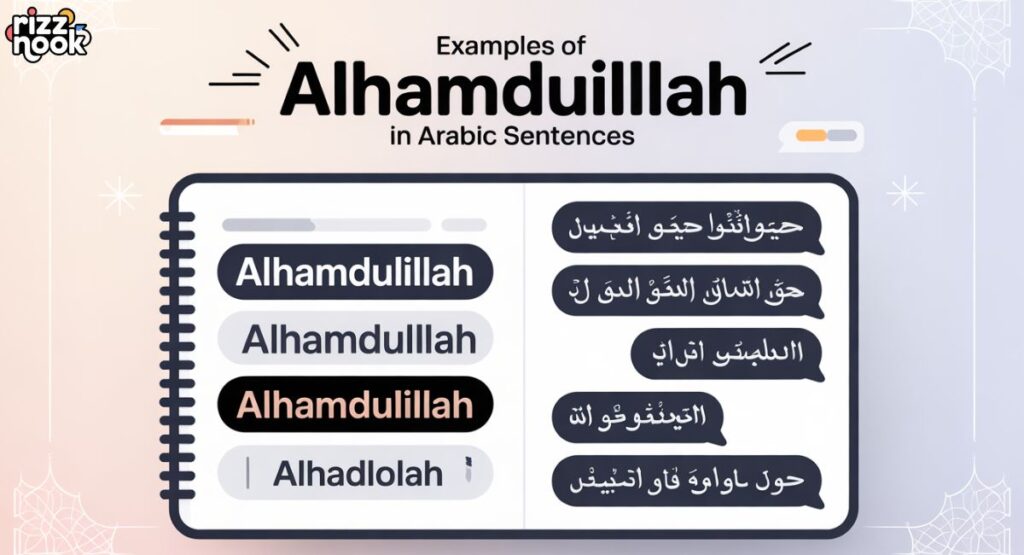
Seeing Alhamdulillah in context makes it easier to understand and use naturally. Here are a few simple examples:
- الحمد لله على كل حال (Alhamdulillah ala kulli haal) – “Praise be to Allah in every situation.”
- الحمد لله الذي بنعمته تتم الصالحات (Alhamdulillah allathee bini’matihi tatimmu al-salihat) – “All praise is due to Allah by whose blessings good deeds are completed.”
- الحمد لله على نعمته (Alhamdulillah ala ni’matihi) – “Praise be to Allah for His blessings.”
Real-life usage example:
- After finishing a meal: “Alhamdulillah ala ni’matihi” – “Thank Allah for His blessings.”
- After passing a test: “Alhamdulillah!” – Expressing gratitude for success.
These examples show how Alhamdulillah in daily life can be used in prayers, casual conversation, or written Arabic. Practicing these sentences helps reinforce both spiritual and linguistic understanding.
Common Misunderstandings or Mistakes
Even though Alhamdulillah meaning is simple at first glance, people sometimes misunderstand how and when to use it. These mistakes can make the phrase feel less sincere or even contextually incorrect. Understanding common errors helps ensure it’s used respectfully and accurately.
Frequent mistakes to avoid:
- Using it only in good times: Some think Alhamdulillah is only for happy moments, but it’s appropriate during challenges too (Alhamdulillah during hardship).
- Confusing it with MashAllah: Saying Alhamdulillah to compliment someone else’s success is incorrect; use MashAllah instead.
- Mechanical repetition: Repeating the phrase without understanding its meaning reduces sincerity.
- Incorrect pronunciation: Mispronouncing it can change its clarity, so learning proper Arabic pronunciation is important.
- Skipping context: Using it sarcastically or jokingly can come across as disrespectful.
Example:
- Wrong: After a friend shares good news sarcastically: “Alhamdulillah…”
- Correct: Respond genuinely: “Alhamdulillah, that’s wonderful!”
By learning the correct use of Alhamdulillah in daily life, you can express true gratitude, respect Islamic etiquette, and make the phrase a meaningful part of both spiritual practice and everyday conversation.
FAQs
What is the meaning of Alhamdulillah?
Alhamdulillah meaning is all praise is due to Allah. It expresses gratitude for blessings, guidance, and protection, reflecting faith and mindfulness in both everyday life and spiritual practices.
When should we say alhamdulillah?
Alhamdulillah meaning is used whenever you feel grateful, whether for good news, completing a task, or during challenges. Saying it regularly strengthens patience, faith, and a positive outlook in life.
What does اللهم بارك mean?
The phrase اللهم بارك means may Allah bless it or increase goodness. Alhamdulillah meaning is connected, as both phrases express gratitude and recognition of Allah’s blessings and guidance.
How do I reply to Alhamdulillah?
When someone says Alhamdulillah, reply with Alhamdulillah or JazakAllahu Khair. Alhamdulillah meaning in this context shows acknowledgment, appreciation, and polite participation in their expression of gratitude.
What can I say instead of alhamdulillah?
Instead of Alhamdulillah, you can say thanks to Allah or praise be to Allah. Alhamdulillah meaning covers all expressions of gratitude, making these alternatives contextually appropriate and spiritually correct.
How to reply to thank you in Islamic way?
Reply with Alhamdulillah or JazakAllahu Khair when someone says thank you. Alhamdulillah meaning reminds you to acknowledge Allah’s blessings, showing gratitude and sincerity in Islamic etiquette.
Conclusion
Understanding alhamdulillah meaning helps you appreciate its true value in daily life. The phrase is more than words; it is a reminder to be grateful for every blessing. Knowing alhamdulillah meaning in Hindi makes it easier for Hindi speakers to connect with its spiritual depth. Even the full Quranic form, alhamdulillahi rabbil alamin meaning in Hindi, highlights praise for Allah, showing how gratitude is central to faith. Learning alhamdulillah English translations also helps non-Arabic speakers understand and use it correctly.
Knowing how to reply to Alhamdulillah politely is important in conversations. Saying it sincerely strengthens relationships and faith. Practicing alhamdulillah meaning in daily life, at work, at home, or during prayer, keeps you mindful and thankful. Using it often turns ordinary moments into spiritual reminders of Allah’s blessings.
Read Next : ASH Meaning in Text Messages: Real Examples and Easy Explanation

Welcome to Rizz Nook! I am Kairo, an AI-powered SEO and Content writer with 4 years of experience. I help websites rank higher, drive more traffic, and look great. My goal is to make SEO and web design simple and effective for everyone. Let’s achieve more together.