
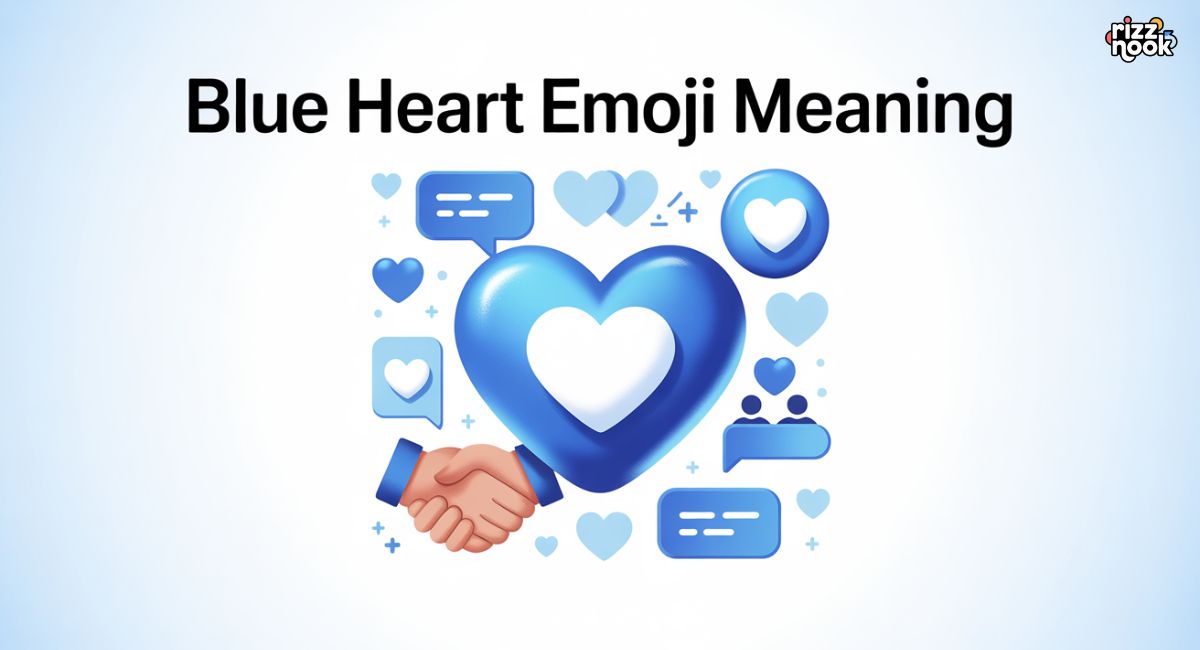
Sometimes you see a 💙 in a message and pause for a second. Is it friendly, romantic, or something else entirely? I’ve been there too, searching online late at night, trying to figure out the Blue Heart Emoji Meaning without overthinking the chat. That small blue heart emoji can feel confusing when you don’t know the intent behind it.
In this post, I’ll clearly explain the Blue Heart Emoji Meaning in simple words. You’ll learn what does the blue heart emoji mean in different situations, including friendships, love, and online chats. I’ll also touch on the light blue heart emoji and how it slightly changes the tone. By the end, you’ll know exactly how to read it, and when to use it yourself.
What Does the Blue Heart Emoji 💙 Mean?
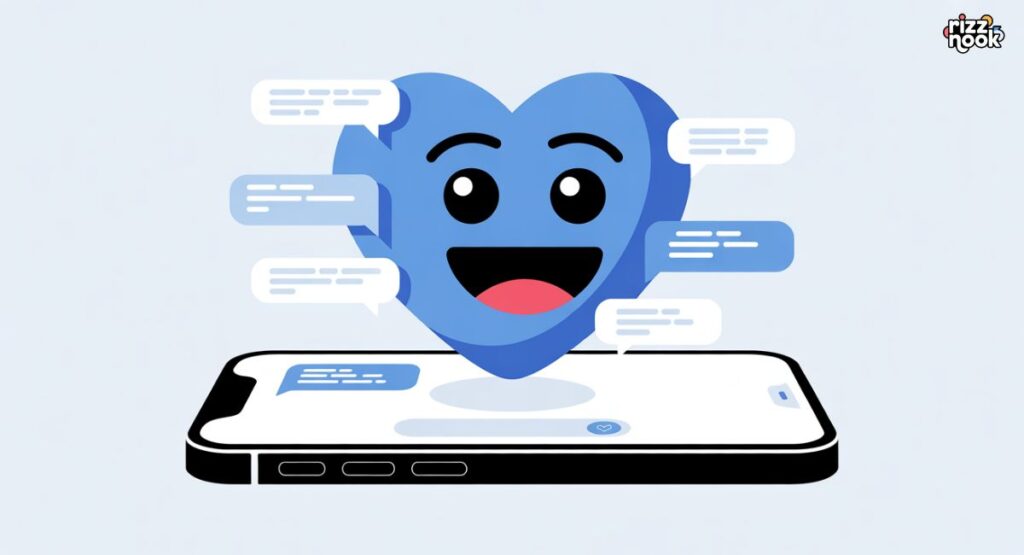
The Blue Heart Emoji Meaning is often associated with trust, loyalty, and calm feelings. People use it to show platonic love, friendship, or support in messages and on social media platforms. It can also convey a sense of peace or emotional stability, making it different from the classic red heart emoji.
The blue heart emoji first appeared as part of the Unicode standard in 2010 and has since become popular in texting, online chats, and social media. Its meaning is flexible depending on who sends it and in what context. In general, it’s a positive symbol that emphasizes care, emotional support, or strong bonds without being overly romantic.
The interpretation may vary depending on the situation:
- Friendship or Platonic Love: Often sent between friends to show trust and loyalty.
- Support and Care: Used to express encouragement, sympathy, or emotional support.
- Calmness and Peace: Can represent serenity or calm emotional vibes in a conversation.
- Fandom or Team Spirit: Fans sometimes use it to support sports teams or favorite celebrities associated with blue.
Example 1:
- Friend: “Congrats on your promotion! 💙”
- You: “Thanks! That means a lot.”
Example 2:
- Chat between colleagues: “Great job on the project 💙”
- This shows appreciation without implying romantic feelings.
By understanding these meanings, you can use the blue heart emoji appropriately in digital communication, social media, or texting without confusing the recipient.
Basic Definition of the Blue Heart Emoji
The blue heart emoji represents feelings of trust, loyalty, and calmness. Unlike the red heart, which often implies romantic love, the blue heart is more about platonic affection and supportive bonds. It’s commonly used in text messages, online chats, and social media to show friendship, emotional support, or appreciation.
In modern digital communication, the blue heart emoji is versatile. People send it to friends, family, or colleagues to express care, encouragement, or solidarity. It can also emphasize a calm or peaceful tone in messages, making it ideal when you want to show positive emotions without implying romance.
The Origin of the Blue Heart Emoji 💙
The blue heart emoji was introduced as part of the Unicode 6.0 standard in 2010, along with other colored heart emojis. Its color was chosen to stand out from the traditional red heart while still conveying positive emotions. Over the years, it has become popular across texting apps, social media platforms, and online communities.
Originally, the emoji’s use was simple: a visual representation of a “blue heart” in digital communication. Today, its meaning has expanded to include friendship, loyalty, support, and even fandom or team spirit. Its popularity reflects how people use color symbolism in everyday online expression.
Emotional Meaning Behind the Blue Heart 💙

The emotional tone of the blue heart emoji is generally calm, supportive, and reassuring. People often use it to express trust, loyalty, or deep platonic affection. It conveys positive emotions while keeping the message friendly and non-romantic.
The interpretation may vary depending on the situation:
- Supportive: Sending a blue heart to show encouragement or care.
- Platonic Love: Between friends or family to emphasize loyalty.
- Calmness: To signal peace, emotional balance, or a soothing vibe.
- Team or Fandom Spirit: Showing allegiance to a sports team, celebrity, or community associated with blue.
Example:
- Friend: “I’m feeling nervous about the presentation 💙”
- You: “You’ve got this! I’m here for you 💙”
Common Interpretations of the Blue Heart Emoji
The blue heart emoji can carry different meanings depending on the context. In general, it represents trust, loyalty, and calm emotions, but it can also signal support, friendship, or non-romantic affection. People use it to convey care without implying romantic intent, which makes it versatile in digital communication.
The interpretation may vary depending on the situation:
- Friendship or Platonic Love: Sent between friends to show loyalty and care.
- Support and Encouragement: Used in texts to show empathy or back someone up emotionally.
- Peace and Calmness: Often signals serenity or a calm emotional tone.
- Fandom or Team Spirit: Fans sometimes send it to show loyalty to a sports team, brand, or celebrity.
Example:
- Friend: “Thanks for helping me move today 💙”
- You: “Of course! Anytime 💙”
How the Blue Heart Emoji 💙 Is Used in Text Messages
In text messages, the blue heart emoji is widely used to strengthen a message or show positive emotions. It can convey support, appreciation, or reassurance in just one small symbol. People often use it in casual conversations, professional chats, and even group messages to express care without overdoing romance.
Tips for use in texts:
- Do: Use it with friends, family, or colleagues to show support.
- Don’t: Overuse it in romantic contexts unless the intention is clear.
- Do: Pair it with short, friendly messages to emphasize positive emotions.
Example:
- Colleague: “Great job on the report 💙”
- You: “Thanks! Glad it helped the team 💙”
Blue Heart Emoji Meaning on Social Media
On social media, the blue heart emoji often communicates emotional support, friendship, or community spirit. People use it in comments, posts, or captions to show care, loyalty, or solidarity with a cause. It’s also common in fandoms or campaigns, especially when blue represents a brand, team, or awareness initiative.
Popular uses on social media:
- Supporting friends or public figures
- Highlighting calm, peaceful, or friendly messages
- Showing loyalty to a team, brand, or online community
- Participating in awareness campaigns (mental health, autism, etc.)
Example:
- Instagram comment: “We love seeing you succeed 💙”
- Twitter post: “Join us in supporting the clean water campaign 💙”
Real-World Examples of the Blue Heart Emoji 💙
The blue heart emoji appears in many everyday conversations, both casual and professional. It’s often used to show friendship, trust, or support in a simple, visual way. Seeing it in messages or social media posts helps convey emotion quickly without words.
Example 1 – Friendship:
- Friend: “Thanks for always being there 💙”
- You: “Always! You can count on me 💙”
Example 2 – Social Media/Fandom:
- Instagram: “Proud of our team for winning the championship 💙”
Example 3 – Supportive Message:
- Text to a sibling: “Don’t worry, you’ll do great 💙”
These examples show how the emoji communicates platonic love, loyalty, and encouragement in real-world digital interactions.
How the Blue Heart 💙 Differs From Other Heart Emojis
The blue heart emoji is unique because it emphasizes trust, loyalty, and calmness, rather than romantic love. In contrast:
| Heart Emoji | Common Meaning | Typical Use |
| ❤️ Red Heart | Romantic love, passion | Partners, crushes |
| 💛 Yellow Heart | Friendship, happiness | Friends, positive vibes |
| 💚 Green Heart | Health, growth, envy | Eco topics, healing, platonic |
| 💙 Blue Heart | Loyalty, support, calm | Friends, fandom, teams |
| 🖤 Black Heart | Sarcasm, grief, dark humor | Jokes, mourning |
| 🤍 White Heart | Purity, peace, platonic love | Supportive, gentle messages |
This comparison helps readers understand when to use the blue heart instead of another heart emoji, ensuring the intended emotional tone is clear.
Light Blue Heart Emoji

The light blue heart emoji is a subtle variation of the standard blue heart. It usually conveys softer, calmer emotions or lighter forms of friendship and support. People often use it when they want to express affection or appreciation gently, without the stronger symbolism associated with the standard blue heart.
Example:
- Friend: “Thanks for helping me out today 💙”
- You: “No problem! Happy to help 💎” (light blue heart may be represented in some platforms as 💎 or lighter blue heart)
The light blue heart is particularly popular in casual texting, social media, and situations where a soft, friendly, or caring tone is preferred.
Blue Heart Emoji Meaning From Girl
When a girl sends a blue heart emoji 💙, it usually conveys friendship, trust, or calm affection rather than romantic interest. She may be showing support, appreciation, or a platonic bond. The blue heart keeps the tone friendly and positive without adding pressure or romantic expectations.
Example:
- Girl: “Good luck on your presentation 💙”
- You: “Thanks! That means a lot 💙”
In digital communication, this emoji is often paired with casual or encouraging messages, making it a safe way to express care and loyalty without misunderstanding.
Blue Heart Emoji Meaning From a Guy
When a guy sends a blue heart 💙, it often signals friendship, loyalty, or respect. Similar to how girls use it, it can also show support, encouragement, or platonic affection. Sometimes, it’s a way to express emotional depth while keeping the message non-romantic.
Example:
- Guy: “Great job on the project today 💙”
- You: “Thanks! Appreciate your support 💙”
The blue heart allows men to express positive emotions, encouragement, and trust in a subtle, friendly way without suggesting romantic intent.
Blue Heart Meaning in a Relationship
In a relationship context, the blue heart emoji 💙 is often used to convey trust, loyalty, and emotional stability. While it’s less romantic than the red heart, it shows a strong bond and support between partners. Couples may also use it to highlight calm, steady love or platonic aspects of their connection.
Example:
- Partner: “I’m here for you, no matter what 💙”
- You: “I feel the same 💙”
The blue heart works well for long-term relationships where trust and emotional support are key, or when partners want to mix playful friendship with love.
Pros and Cons of Using the Blue Heart Emoji
Using the blue heart emoji 💙 has several advantages.
Pros:
- Shows trust, loyalty, and support without implying romance.
- Works well for friendship, platonic love, or professional messages.
- Adds emotional nuance to short texts or social media posts.
- Can be used to express team spirit, fandom, or solidarity.
Cons:
- Its meaning may be misunderstood as romantic or distant if context isn’t clear.
- Overusing it can dilute its emotional impact.
- Some platforms may display color variations that confuse the tone (e.g., light vs dark blue).
Current Trends in Blue Heart Emoji Usage
The blue heart emoji has grown in popularity across texting apps and social media platforms. Many users send it to show emotional support, friendship, or loyalty, especially in digital communities and fandoms. It is also commonly used in mental health campaigns and awareness initiatives, highlighting care and solidarity.
Additionally, brands and influencers use it in posts to create a friendly, supportive tone, appealing to online audiences seeking trust and calm positivity. The emoji’s use is increasingly versatile, spanning personal, social, and professional contexts.
Future Outlook: Will the Blue Heart Emoji 💙 Change in Meaning?
The blue heart emoji is unlikely to lose its core meanings of trust, loyalty, and support. However, its interpretations may evolve with trends in digital communication, social media culture, and color symbolism.
Future uses could include:
- Greater adoption in brand messaging and online campaigns.
- Expanded meaning in global digital communities.
- Subtle shifts to convey mental health awareness or emotional nuance.
In short, while minor variations may appear, the blue heart will remain a symbol of calm, supportive, and friendly emotions.
When Should You Use the Blue Heart Emoji 💙?
Use the blue heart emoji 💙 when you want to express friendship, loyalty, support, or calm emotions. It works best in:
- Messages to friends or family to show care and encouragement.
- Professional or casual chats where platonic support is needed.
- Social media posts or comments emphasizing solidarity, fandom, or community support.
- Situations requiring emotional reassurance without implying romance.
Quick Tip: Pair it with a short message to make your intention clear and avoid misunderstandings.
For example: “Congrats on your achievement 💙” or “I’m here if you need me 💙”
Frequently Asked Questions
What does the blue heart emoji 💙 mean?
The blue heart emoji usually represents trust, loyalty, friendship, and calm emotions rather than romantic love.
What is the meaning of a light blue heart emoji?
A light blue heart emoji shows softer emotions, gentle support, and platonic affection in messages.
What does a blue heart emoji from a girl mean?
It often signals friendship, trust, or emotional support in a friendly, non-romantic way.
What does a blue heart emoji from a guy mean?
It usually conveys loyalty, encouragement, or platonic care without implying romance.
How is the blue heart emoji 💙 used in texting?
People use it to show support, friendship, or calm emotions in casual or professional messages.
What does 💙 mean when texting?
The blue heart emoji 💙 usually shows trust, loyalty, or calm emotions. People use it to express friendship, support, or caring feelings in messages.
Does 💙 mean friendship?
Yes, the blue heart often represents friendship and platonic love. It is a safe way to show support, loyalty, and care without implying romance.
What does ❤ 🧡 💛 💚 💙 💜 mean?
Each colored heart has a different meaning: ❤️ romantic love, 🧡 happiness, 💛 friendship, 💚 growth, 💙 loyalty, and 💜 compassion or admiration.
What is the difference between ❤ and 💙?
The red heart ❤️ shows romantic love or passion, while the blue heart 💙 emphasizes trust, loyalty, friendship, and calm, supportive emotions.
Does 💙 mean friendzone in texting?
Not necessarily, but sometimes it can indicate platonic feelings. It mainly represents loyalty, friendship, and care rather than romantic or passionate love.
Final Thoughts
The Blue Heart Emoji Meaning is all about trust, loyalty, and friendship. Knowing what does the blue heart emoji mean helps you use it the right way in texts, chats, or social media. The blue heart emoji shows support, care, and calm emotions without being romantic. A light blue heart emoji is softer and often signals gentle friendship or appreciation.
Understanding the Blue Heart Emoji Meaning makes your messages clear. Now you can send a blue heart emoji to friends, family, or colleagues with confidence. Knowing what does the blue heart emoji mean avoids confusion. Even a light blue heart emoji can express care subtly. Using the blue heart emoji correctly adds warmth and trust to your digital conversations.
Read Next: White Heart Emoji Meaning: What It Really Says in Texts & Social Media

Welcome to Rizz Nook! I am Kairo, an AI-powered SEO and Content writer with 4 years of experience. I help websites rank higher, drive more traffic, and look great. My goal is to make SEO and web design simple and effective for everyone. Let’s achieve more together.